





Engineering the Disc Wheel
Developing the world’s fastest disc rear wheel isn’t easy—and it certainly doesn’t happen overnight. At ENVE, innovation is driven by engineering excellence, relentless testing, and real-time collaboration with the fastest cyclists on the planet. Leading the charge is engineer Colter Blanchard, whose one mission is clear: make the best disc rear wheel for triathlon and time trial racing.

Q: What’s your background, and how did you end up at ENVE?
I was born and raised in Northern Utah in a big, outdoorsy family. I picked up cycling in high school while recovering from track and cross-country injuries—it started as cross-training, but I quickly fell in love with it. I kept riding throughout my running career and while earning a BS in Mechanical Engineering at Weber State University, along with minors in Mathematics and Spanish.
I joined ENVE by doing what I now call “shooting my shot.” I applied for a position I wasn’t quite qualified for, but I went for it anyway. Jake Pantone, our VP of Product, saw my resume and called me. He was upfront that I wasn’t the right fit for that role, but he invited me to visit, meet the team, and tour the headquarters. After a panel interview with six engineers, I got a job offer. The rest is history.
Q: When developing the disc rear wheel, do you start with target metrics like weight or aero, or build what you can and see where it lands?
From the beginning, we had firm performance goals: weight, stiffness, dish, and cosmetics. But achieving all of them takes balance; you can't chase one metric too hard without risking the others. That’s why we design in small, intentional steps, constantly iterating.
One of ENVE’s greatest strengths is that everything happens in-house. We design a wheel, build it, test it, learn from it—and then improve it—all within days. That agility keeps us at the cutting edge.

Q: How much do professional teams influence development through feedback?
It’s huge. As we built prototypes, we sent them to our sponsored riders for real-world testing—racing, training, and everyday use. Their feedback is essential. It comes directly from experience, and it shapes our development in real time.
Sometimes, the best feedback is no feedback at all. That means we nailed it.
Q: You not only developed the disc wheel—you’ve built almost every one. How does that affect your process?
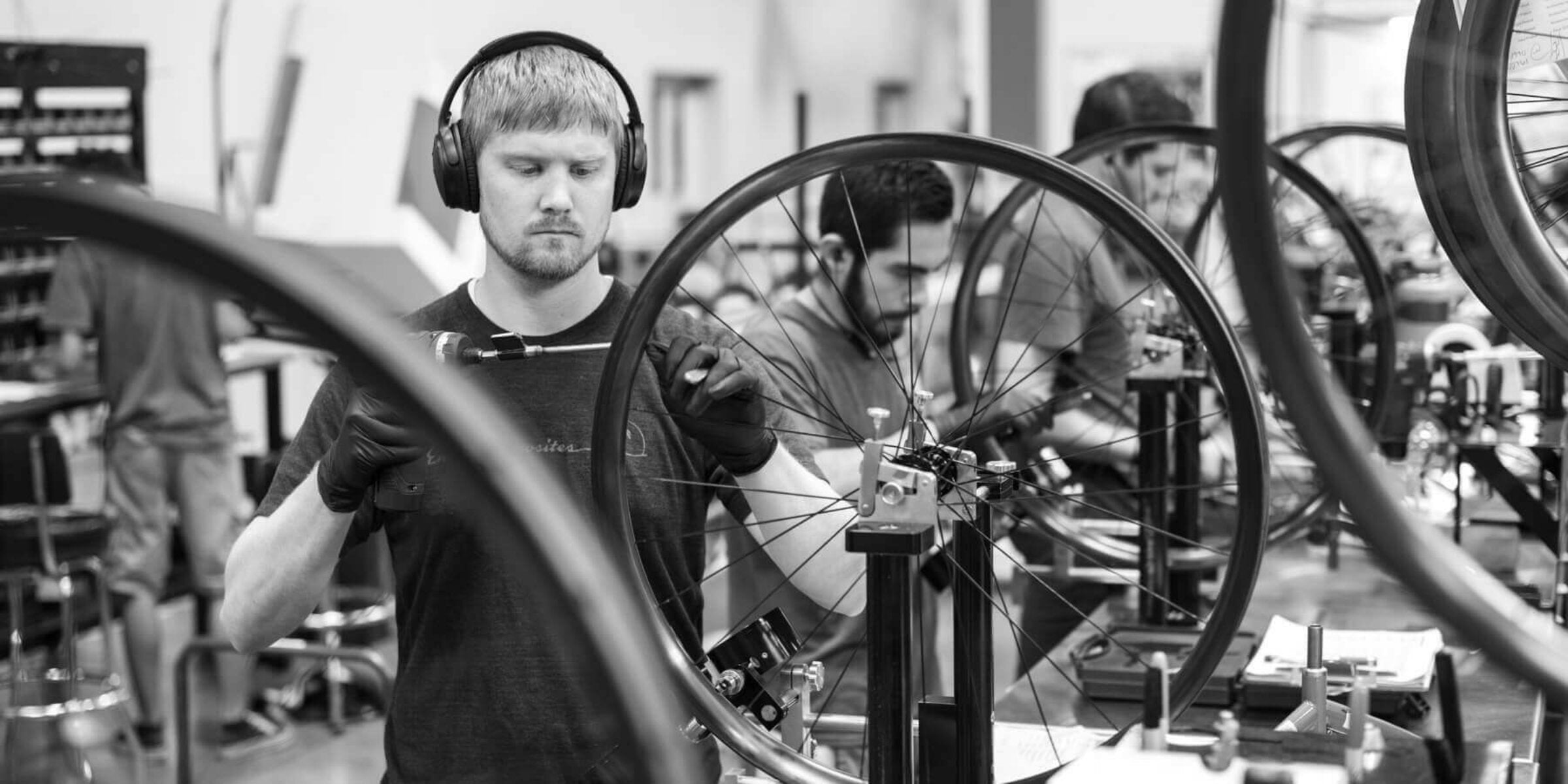
Yes, since I took on the project in late 2024, I’ve hand-built nearly every iteration. That hands-on approach is crucial. Designing is one thing, but building gives you a totally different layer of insight.
You understand the product better when you understand the process. And credit goes to our wheel layup techs—they’re artists with carbon fiber. Watching them bring these wheels to life has been incredible.

Q: This wheel had been limited to pro teams like UAE Team Emirates-XRG and elite triathletes. Now that it has been released globally, how does your focus change?
My role continues through commercialization and beyond. As we prepped to produce adequate quantities to release in all markets, we looped in teams across ENVE—engineering, QC, marketing, and sales. Everyone plays a part at that point.
We’ll keep refining based on customer feedback while also looking ahead to future disc wheels. It’s not just about product development; it’s an interconnected system.
Q: What is it like seeing the wheel you helped build play a key role in Tadej’s pursuit for a record fifth Tour de France overall victory?
Honestly, it's surreal. When I joined ENVE, I never imagined I’d see a product I helped design and handcraft perform on the world stage like that.
ENVE is based right here in Ogden, Utah, and to watch our wheels help top athletes win at the highest level is something special. When our athletes win, it's all high-fives and backslaps. I’m proud to play a small part in that story.


