






Tadej's Return to the Vuelta

Seven years after his lone appearance at La Vuelta a España, Tadej Pogačar returns as one of the most accomplished riders in cycling history, with another Grand Tour victory in his sights.
The last time Tadej Pogačar raced La Vuelta a España, he was a 20-year-old neo-pro with a single WorldTour victory to his name. Now, in 2026, he returns as a five-time Tour de France champion, two-time World Champion, and 13-time Monument winner, including five consecutive victories at Il Lombardia.
The world has changed. So has Tadej.
Returning to the Vuelta fresh off his fifth Tour de France victory, Pogačar arrives in Spain after helping UAE Team Emirates-XRG teammate Isaac Del Toro secure the white jersey and a third-place finish in Paris. A lighter race schedule in the first half of 2026 has left him fresher than usual at this point in the season, helping drive the decision to take on a second Grand Tour.
Pogačar has already proven he can win multiple Grand Tours in a single season, completing the Giro d'Italia-Tour de France double in 2024. But this challenge may be even more demanding.The Vuelta runs from August 22 through September 13, ending just seven days before the UCI Road World Championships Time Trial and 14 days before the World Championships Road Race. It also mean s Pogačar will skip the Canadian Classics for the first time since 2023.
While the Canadian races have never been the primary objective of his season, they carry extra significance in 2026. Montréal's World Championship road race circuit closely mirrors the Grand Prix Cycliste de Montréal route, a course where Pogačar has enjoyed success in the past.Before turning his attention to Worlds, however, he'll return to a race he hasn't contested in seven years.
La Vuelta awaits.

"Seven years after his Vuelta debut, Pogačar returns as one of the most decorated riders the sport has ever seen."
A Home Start in Monaco
The Vuelta begins with a 9.4-kilometer individual time trial on Monaco's famous Formula 1 circuit. For Pogačar, it is as close to a home race as professional cycling gets. In fact, he could practically ride to the start ramp from home. A short time trial is not necessarily ideal for Pogačar, but this course is highly technical, featuring tight corners, elevation changes, and rapid accelerations. The opening stage won't create significant GC gaps, but everyone will be looking for an early advantage.
The first week quickly transitions into terrain that better suits the reigning Tour de France champion. Stage 2 is likely to favor the puncheurs, while Stage 3 concludes with a 10-kilometer climb that could begin to reveal the first hierarchy among the GC contenders.
Stage 4 brings more than 3,000 meters of climbing packed into just 105 kilometers through Andorra, offering the first real launchpad for aggressive racing. Two days later, attention shifts to Puerto El Bartolo, one of the race's most intriguing climbs. The 9.4-kilometer ascent averages 7%, but the defining feature is a steep gravel sector midway up the climb. The combination of gradient, surface, and sustained power requirements creates the ideal terrain for a rider capable of producing explosive efforts over long durations.
Choosing the Right Equipment for Every Stage
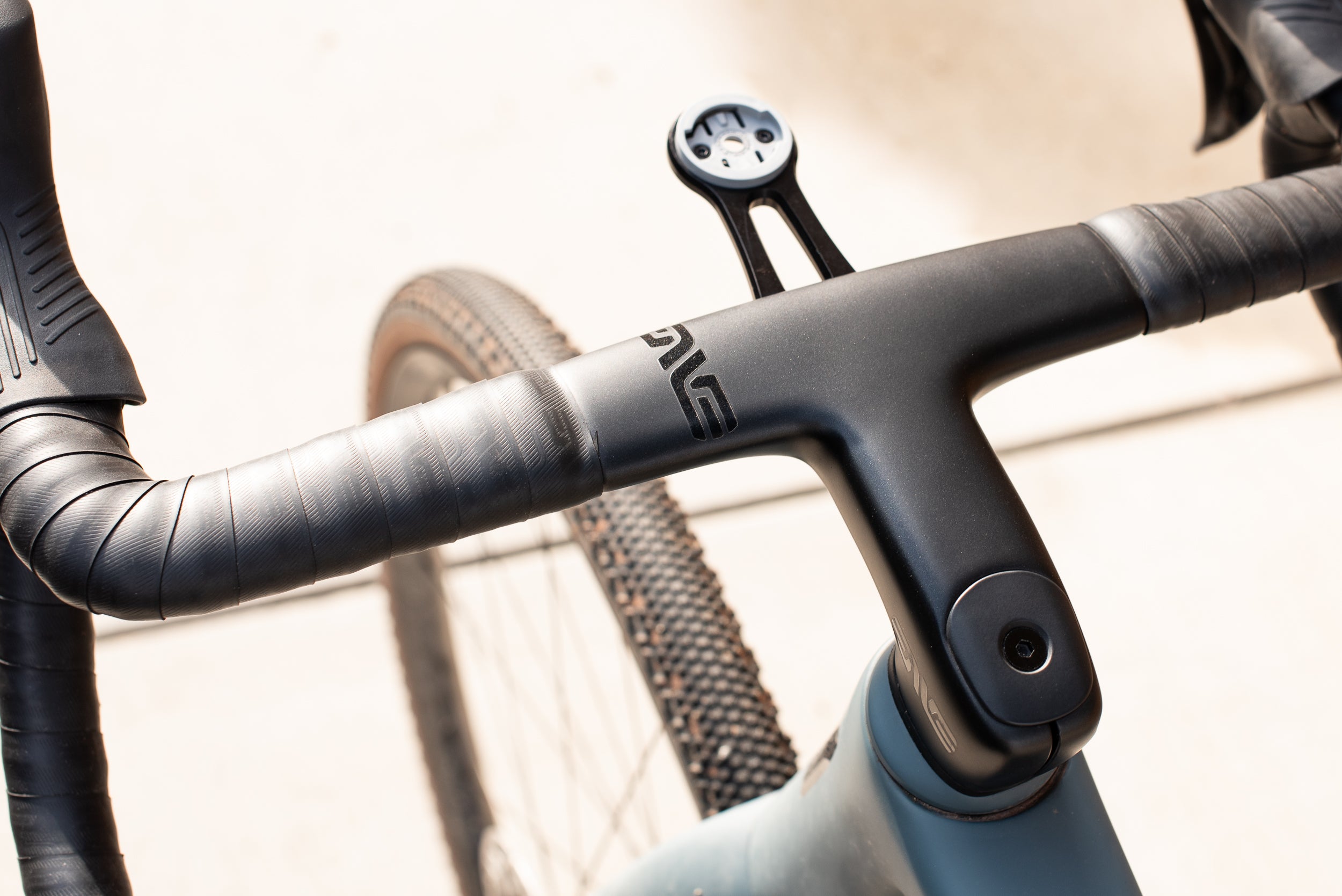
Throughout the Vuelta, UAE Team Emirates-XRG will rely on ENVE's SES wheel lineup, selecting configurations that balance aerodynamic efficiency, low weight, and stability across varying terrain.
Depending on the demands of each stage, riders can choose between the lightweight SES 4.5 PRO and the aero optimized SES 6.7. While the SES 4.5 PRO will be the team's most-used wheel throughout the race, the SES Disc PRO and SES 100 PRO will be used in the twotime trialsAs the race progresses toward its first rest day, the difficulty ramps up significantly. Stage 9 delivers more than 5,000 meters of climbing across 189 kilometers before finishing atop Alto de Aitana, the first major summit finish of the race.
If Pogačar hasn't already gained time by this point, this is where the battle for red could truly begin.
Understanding VAM
There are many ways to measure climbing performance, but one of the most useful is VAM, short for the Italian phrase velocità ascensionale media.
VAM measures vertical climbing speed, expressed as vertical meters climbed per hour. The higher the number, the faster a rider is climbing. Elite amateur cyclists may sustain 600-1,000 Vm/h, while the world's best climbers regularly exceed 1,800 Vm/h on major mountain efforts.
Alto de Aitana | Stage 9
Estimated Time: 15-16 minutes
Estimated VAM: 1,950-2,000 Vm/h

The final 6.6 kilometers of Alto de Aitana average nearly 8%, creating the sort of sustained effort where UAE Team Emirates-XRG can gradually increase the pace before launching Pogačar on the steepest slopes.
The scenario closely resembles the Tourmalet stage from this year's Tour de France, where a relentless team tempo softened the field before Pogačar delivered the decisive blow.

"The challenge isn't whether Tadej can win stages. It's deciding which stages are worth winning."
Where the Race Could Be Won
One of the defining characteristics of this year's Vuelta is the absence of opportunities for pure sprinters. Aside from Stage 17, nearly every stage includes meaningful climbing, making the race ideally suited to versatile riders who can win across different terrain.
That profile describes Pogačar perfectly.
Short climbs, rolling finishes, medium-mountain stages, and summit finishes all present opportunities for him to gain time or pursue stage victories. Stages 12 and 14 feature challenging Category 1 ascents, while numerous transition stages include uphill finishes that could be difficult for traditional sprinters to survive.
The second and final time trial arrives on Stage 18. At 32.1 kilometers, the course favors specialists, but it also serves as an important rehearsal for the World Championship Time Trial that follows just days later in Montréal.
The Final Test
Everything builds toward the final mountain block.
Stages 19 and 20 deliver more than 9,000 meters of combined climbing, creating the decisive battleground for the overall classification. Stage 19 finishes atop Peñas Blancas before the race culminates with the Queen Stage and the brutal slopes of Collado del Alguacil.
The final climb measures 8.3 kilometers at an average gradient of 10%, making it arguably the hardest ascent of the entire race.
Collado del Alguacil | Stage 20
Estimated Time: 25-26 minutes
Estimated VAM: 1,950-2,050 Vm/h

This is also the stage where equipment selection becomes especially important.
With four major climbs averaging between 8% and 10%, climbing speeds drop and weight savings become increasingly valuable. Of all the stages in the race, this is the one most likely to see UAE Team Emirates-XRG choose the climbing-focused ENVE SES 2.3.
Can Tadej Win Another Grand Tour?
If each stage of the Vuelta were raced in isolation, Pogačar would start among the favorites on nearly every day of the race. The real challenge is managing effort across three demanding weeks while keeping an eye on the World Championships and Il Lombardia that follow shortly thereafter. The Vuelta offers little respite. There is only one true sprint stage, mountain finishes are plentiful, and late-summer temperatures can be unforgiving.
Yet few riders in history have demonstrated Pogačar's ability to recover and perform across an entire season. His victories in Strade Bianche, the Giro d'Italia, Tour de France, World Championships, and Il Lombardia during 2024 remain one of the most remarkable campaigns the sport has ever seen.
Now, seven years after his last appearance at La Vuelta, he returns fresher than ever with another opportunity to make history. And if the opening time trial in Monaco is any indication, that pursuit could begin just a few steps from his front door.


