





Thirst For Speed

To design a bike that's fast in the real world, we had to consider the necessities of riding, including the rider, bottle cages, and bottles. While all bikes lose efficiency when you add cages and bottles, our goal was to design bottle cages that minimize losses and negate the drag of bottles.
It’s no secret that a lot of turbulence and potential aero drag comes off the rider's legs and where bottles sit in the frame. It’s a fluid dynamics nightmare, and it's highly sensitive to tweaks and changes, making the design process extremely challenging. Working with Simon Smart in the Mercedes-AMG Petronas wind tunnel in Silverstone helped us to overcome that challenge.

Another hurdle was the variance in bottle sizes (up to 6mm in diameter) and the shapes of bottle bodies and lids on the market and in your cabinets. Aero efficiency, without bottle security, was a non-starter. Our cages had to be efficient and secure.
THE SOLUTION: The ENVE Aero Bottle Cages. We use position-specific cages (seat tube and downtube), designed to work together as a system (with bottles) to control airflow and reduce drag. The Aero Bottle Cages are designed around standard bottles, so you can use any bottle in your cabinet today. The funnel shape of the cages provides security and makes bottle retrieval simple. Aero and secure.
BONUS: We tested the Aero Bottle Cages and bottles with the ENVE Fray as well as competitor bikes. The result was lower drag and increased aero efficiency across the board!

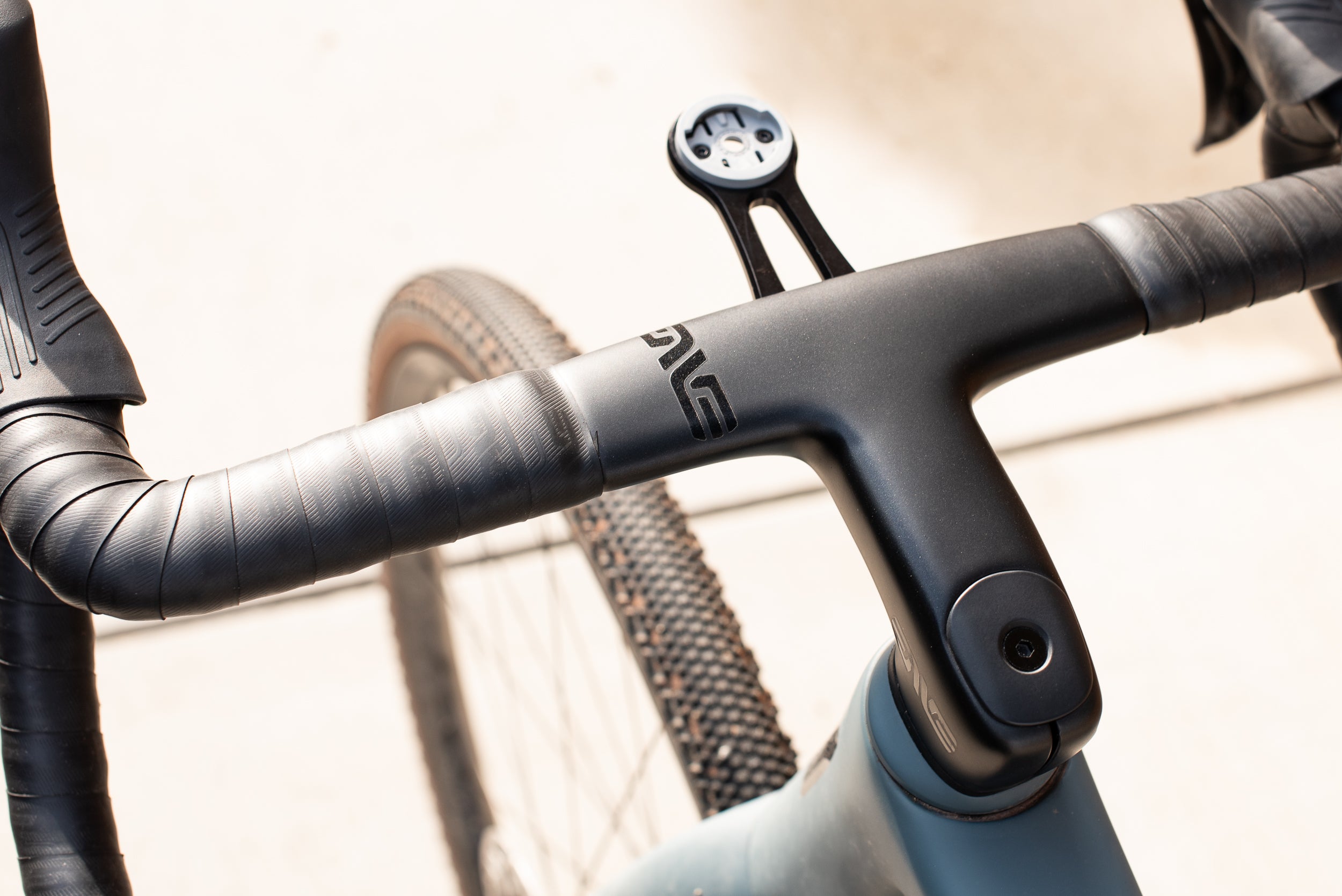
2.6 watts. That’s the drag reduction our new SES Aero Bottle Cages for the Melee v2 provide over a standard system. Combined with the 3 watts saved by the SES Aero One-piece Handlebar with Aero Race Tape and the 11 watts saved by the Melee v2 frame, fork, and seat post design, that’s a total of 17 watts saved over the original Melee. All at a built bike (56cm) weight of 6.8kg, the UCI minimum.


